

Keep Your Feet Where They Are
"Confine yourself to the present."
— Marcus Aurelius
Not to the last win. Not to the next one. Not to how good last week felt, or how bad last month was. Here. This moment. This standard. This rep.
That sounds straightforward until you are actually in a high period and someone is telling you how well you are doing, and your body is producing the kind of momentum that makes it easy to believe you have already arrived. Confining yourself to the present is simple when nothing is pulling you away from it. The real test is holding that discipline when something is.
Inside every SNOW hoodie, stitched into the sleeve where most people will never see it, is a quote:
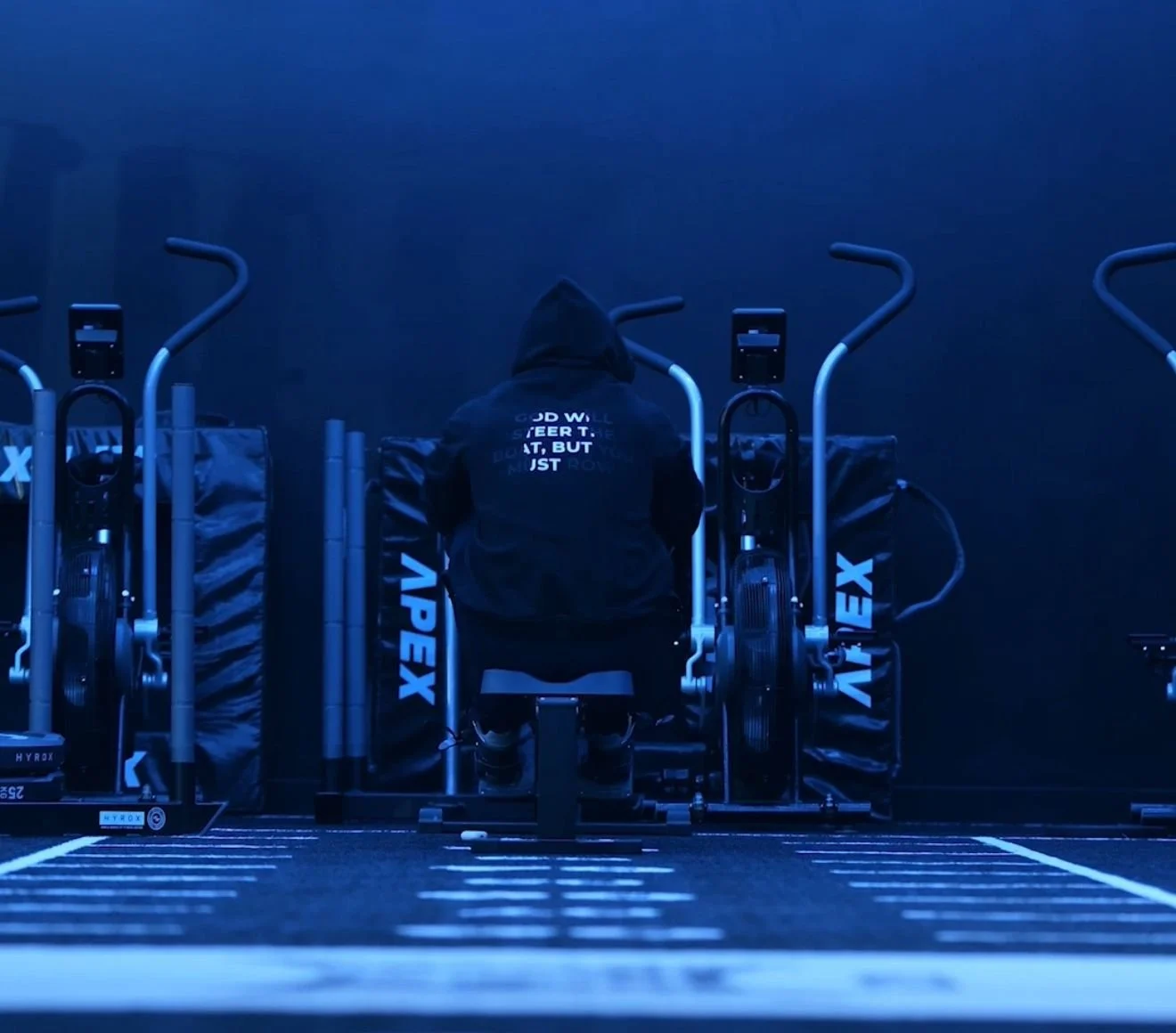
"God will steer the boat, but you must row."
The rowing is not conditional on the weather. You row through the storm because there is no other option. But you also row through the calm, at the same pace, with the same intent, because that is the only version of rowing that actually gets you somewhere. The calm is not permission to ease off. It is a different kind of test.
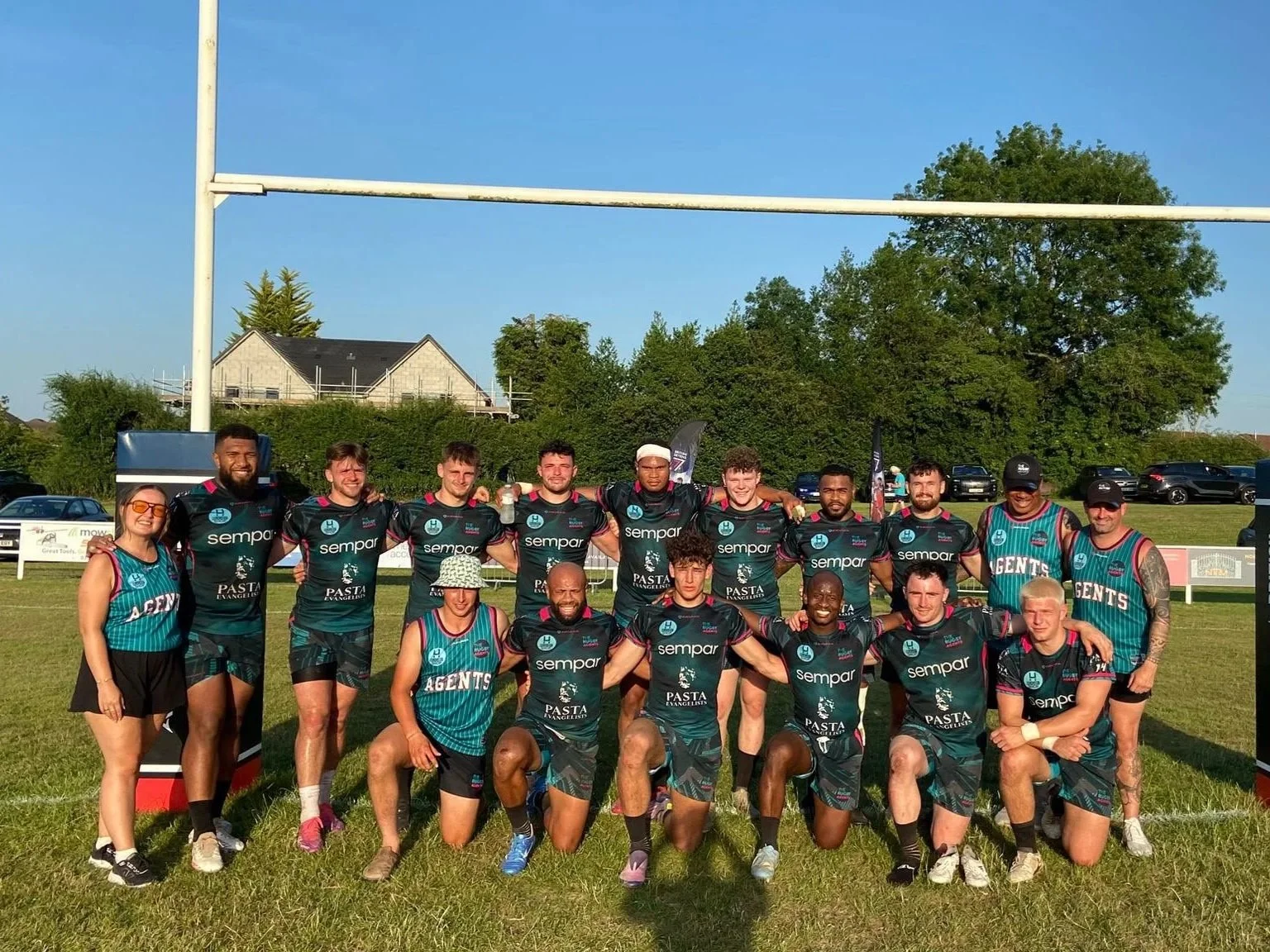
This 7s season has been one of the better periods I have had in rugby. Around six tournaments on the bounce, including a Thursday tournament followed immediately by a Saturday tournament 48 hours later. Different countries, different opposition, barely any time between them. Good performances across the run, real moments. And I will be honest: I am susceptible to letting a run like that become a reason to loosen the standard. Not visibly, not in a way that shows up in a headline, but in the small things. A defensive set goes well, I do my job properly. Then two phases later, when I am tired and the momentum is already good, I catch myself running at 70 or 80 percent instead of finishing the same way I started.
Nobody else would notice. I do. That is the problem with letting a high do the work for you. It does not announce itself as a problem. It just quietly lowers the floor.
In a semi-final on this run, I scored a try. The instinct was immediate: next job. Not celebrate, not reflect, not let the moment expand into something it had not yet earned. Get back, get set, stay in the game. That is the present tense Marcus Aurelius is talking about. Not the try. The next play.
It was only after the semi, sitting with the result and knowing the final was coming, that a different thought arrived. And it was not complicated: if I do not repeat this when it matters most, it means nothing.
Not as punishment. Not as a way of dismissing what had just happened. As a standard. One moment proves you can do it once. The only thing that proves it belongs to you is doing it again, under the same or greater pressure, when the stakes are higher and the opposition knows what is coming.
I scored in the final.
I am not writing this to talk about tries. I am writing it because that sequence is the clearest example I have of what composure during a high actually looks like in practice. Not the absence of emotion, but the management of it. The decision, made in the seconds between the semi-final and the final, to not let the high become the story before the work was finished.
There is a phrase I have returned to more times than I can count, on pitches and at desks and in periods where things are going well and I can feel myself starting to float:
Keep your feet where they are.
It is my version of Marcus Aurelius. It is my version of the sleeve quote. Stay grounded in what is in front of you. The last result is not currency you can spend in the next game. The good week does not carry over automatically. Progress is not what happens when things go right. Progress is what happens when you hold the standard regardless of which direction things are moving.
Everyone talks about resilience in the low. Getting up when you are down, pushing through when it is hard, staying disciplined when the conditions are against you. That is necessary, and it is real, and it matters. But it also has the advantage of urgency. When things are difficult, the pressure itself sharpens you.
The high has no such mechanism. Nobody is forcing your standards up when your form is good and the results are coming and people are telling you that you are doing well. That environment produces a different and quieter kind of drift. Humility in a high is not a soft idea. It is the harder skill, and it is the one that almost nobody develops intentionally, because they are too busy enjoying the run to notice it happening.
SNOW exists in that space. Not as a brand for people who are struggling and need motivation to get moving. As a brand for people who understand that the work does not change shape depending on the result. The discipline that built the first product is the same discipline required to build the next one. The standard that got me through the bad periods is the same standard I am trying to hold now that things are going better.
The boat does not steer itself in the calm. You still have to row.
Keep your feet where they are.
Row Anyway.
"Life can only be understood backwards; but it must be lived forwards."
— Kierkegaard
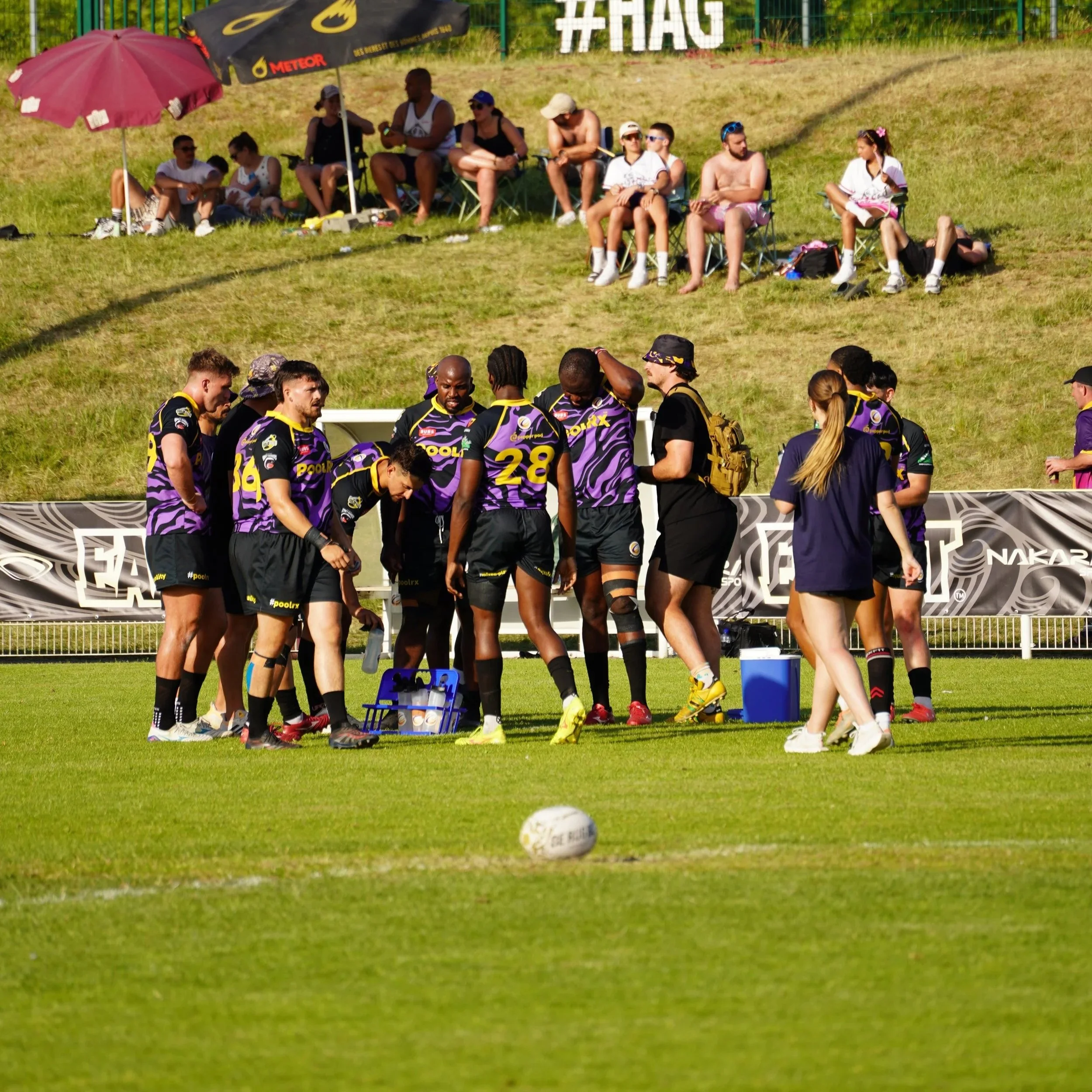
Three weeks ago I was playing rugby in France. Then Amsterdam. Then Lithuania.
If you'd told me that at the start of the year I'd have laughed. Not because I don't believe things can happen fast, but because none of it was planned. There was no campaign, no agent call, no door I'd been standing outside of. It came from a single training session with a coach I met once, stayed in genuine contact with, and never expected to hear from in that particular way.
Stuart Aimer. I trained with him once. We stayed in touch the way you do when someone impresses you and you mean it when you say keep in touch. He put my name forward to the France squad's coach. My SAS coach, the one who named me captain in South Africa, vouched for me to that same coach, who happened to be a close friend of his. I hadn't manufactured any of that. I'd just shown up properly in every room I entered and then got on with the next thing.
Looking backwards, it makes complete sense. Lived forwards, it felt like it came from nowhere.
That's the thing about Kierkegaard's line. It sounds philosophical until it happens to you. Then it just sounds true.
France is where the first surprise hit.
The coach added me to the squad group chat. I scrolled through the names to get a feel for who I'd be playing with. Then I stopped. One of them was one of my best friends from South Africa, the man who I'd trained alongside every day for five months at the SAS camp, who I'd captained, who I'd lived a genuinely different life with for a period of time, and who I hadn't seen in nearly two years.
I'd messaged him days earlier, completely separately, sending him a reel about the "great separation". That stretch of adult life where the people who meant something to a particular chapter of your life drift geographically, and staying connected takes actual effort. We'd been talking about that. And then his name was in the same group chat as mine.
I don't have a neat explanation for moments like that. I'm not going to try and dress it up as something cosmic. What I will say is that it felt significant in the way that things only feel significant when you've been honest and disciplined enough in your own life to have earned a moment that reminds you it's all connected.
The reunion was exactly what a reunion between two people who went through something real together should be. No performance, no awkwardness. Just immediately back to the standard we both hold ourselves to. Competing hard. Playing well. Laughing properly.
Across France, Amsterdam, and Lithuania I met people I will not forget.
That sounds simple when you write it. It doesn't capture what it actually means to walk into a team of strangers, earn your place in 48 hours, and leave three days later feeling like you've known half of them for years. That's a specific kind of human experience. You only get it by putting yourself somewhere unfamiliar and not retreating to safety when it feels uncomfortable.
I've done that enough times now that I recognise the feeling; Milan, South Africa, Rotherham, and now this. Every time, the room that felt foreign on day one felt like mine by the end of the week. Not because I forced it. Because I was honest about who I was and what I was there to do.
The teammates across these three tournaments gave me something I'll carry forward. I won't list them all here because that's not the point. The point is that being part of something temporary and taking it seriously, committing to it fully even when it's brief, produces something that lasts longer than the tournament itself.
The hoodie I built SNOW around carries a quote on its back:
"God will steer the boat, but you must row."
I chose it because it says something I genuinely believe: direction will become clear, but the effort is yours to supply regardless. You don't get to wait for clarity before you commit. You row. The steering happens as a result of the motion, not before it.
Kierkegaard says life can only be understood backwards. The hoodie says you have to row forwards anyway.
Those two things are not in contradiction. They are the same instruction from different angles.
The France call-up makes sense now. South Africa made sense of Rotherham. Rotherham made sense of the night shifts. The injury made sense of SNOW. None of it was legible while I was living it.
That's not a reason to wait for it to make sense before you move.
That's a reason to row harder.
The last few weeks have been some of the best of my life. Three countries, three tournaments, one reunion I didn't see coming, and more teammates worth knowing than I can count.
I don't think that happened by accident. But I also couldn't have planned it.
That's the point.

Operating at 40%
"Be like the headland against which the waves crash and break. It stands firm, while the seething waters are stilled around it."— Marcus Aurelius, Meditations.
Marcus wrote that in a tent, on campaign, in the middle of a plague. He was an emperor, but he wasn't writing for an audience. He was writing to himself. A reminder. Don't move. Let the wave do what waves do. I remain tall.
Eighteen hundred years later the line still works, because the situation hasn't changed. The waves just look different now. They look like a job you don't want that pays the bills you can't avoid. They look like an injury that arrives at the worst possible moment. They look like slow growth, an empty inbox, a launch that doesn't land, a season that doesn't go your way. The ocean is the same ocean. The rock is the same rock.
The only question worth asking is whether you can be it.
What 40% Looks Like
I want to tell you about a tournament I played recently. It is not a heroic story. That's why it's useful.
First game of the day, I took a knock. The kind that doesn't end your tournament but does end the version of you that turned up to win it. By the second match I was operating at about 40%. I could move, but I couldn't move the way I'd trained to move. I could contribute, but I couldn't be the player I'd come to be.
That gap, between the athlete I wanted to be that day and the one I actually was, was the entire problem.
There is a private kind of frustration that lives inside that gap. You spent months getting ready for this. You got up early. You said no to things. You earned the right to be at full power on this exact day, and your body has filed a different opinion. You don't get to argue with it. You only get to choose your posture.
I chose to stay useful. I helped where I could. I called the things I could call. I made the simpler plays that didn't need the body I no longer had. I kept my head clear, which sounds small but is the actual work in that situation. We made the final.
I'm not telling you this because we made the final. I'm telling you this because the version of me who could have lost his head and dragged the team down with him was a real possibility, and the version who didn't wasn't automatic. It was a choice made one play at a time.
The rock didn't move. That's the whole story.
The Upgrade
Here's where I want to push the Marcus line a little.
The pure Stoic rock can read as passive. Just absorb the wave. Just endure. That is not what the athlete or the builder is actually doing. You are absorbing the wave and you are studying it. You're noticing what hit you. You're noticing why. You're working out how to be less surprised next time.
The rock stands firm. The person on the rock takes notes.
That's the version that works for the life you're actually trying to build. Not stone-faced endurance for its own sake. Endurance with intelligence. You don't move when you get hit. But you don't waste the hit either. The lesson is in there. Get it out while it still stings.
Who This Is For
The person I'm writing this for is the semi-professional athlete trying to become a professional. The one who is already deep in it but not yet visible in it. You are training in the gaps in your week. You are working a job that doesn't ask anything of the mission but pays for it. You are quietly curating an identity around something most of the people in your life don't fully understand yet.
You fail in private. You pick yourself up in private. The wave doesn't care that you're tired. The rock doesn't either.
I'm writing this from inside the same ocean. SNOW is being built the same way the tournament was played. Days where I'm at full power. Days where I'm at 40%. Days where the wave looks bigger than the rock. The posture has to be the same in all three. Stand firm. Take notes. Don't move.
That's the work.
What You Do Tomorrow
You don't need a new philosophy. You need to be able to find this one in your body the next time the wave hits.
That's training. Same as everything else. You practise the posture in small waves so you have it ready for the big one. The hard email you don't want to send. The training session you don't want to do. The conversation you've been avoiding. Each one is a small rep of the same skill. Get hit. Don't move. Take the note. Go again.
Marcus wasn't writing to philosophers. He was writing to an exhausted man trying to do a hard job. He wrote the line so he could find it again when he needed it. That is the only use of a line like this. Not to admire it. To find it.
Find yours.
The waves keep coming.
The rock keeps standing.
You took the hit. You stayed on the rock. Tomorrow you train again.
The Monk, The Athlete, and The Wardrobe.
It All Begins Here
There's a moment before the monk enters the temple.
They stop. They adjusts their robe. Not because anyone is watching. Not because the fabric is uncomfortable. They do it because the act of wearing it correctly is part of the practice itself.
They have done this ten thousand times. They’ll do it ten thousand more.
Now picture an athlete. Cold locker room. 5:47am. The session hasn't started. Nobody is watching. They pulls on their hoodie slowly, deliberately, and something shifts.
Not in the room. In them.
These two moments are separated by centuries, cultures and continents. They are the same moment.
Clothing Has Never Just Been Clothing
We've been sold a lie. Mostly by fast fashion. Partly by our own laziness. The lie is that what you wear is aesthetic. Surface. Vanity dressed up as personality.
Go back far enough and every culture on earth understood something we've forgotten: what you put on your body is a statement of intent.
The samurai assembled the dō armour piece by piece, with near-religious precision, before battle. The Stoics wore simple cloaks as a deliberate rejection of excess, a daily reminder of who they were. Indigenous warriors painted and dressed for ceremony, not to look good, but to become something.
The robe. The cloak. The armour. The war paint.
All of it was intentional. All of it was ritual.
Somewhere between the industrial revolution and the invention of the shopping cart, we lost the thread. Clothes became a commodity. Something you grab. Something you discard. Something that happens to you rather than something you choose.
The Science Behind It (And Why It Should Bother You)
In 2012, two researchers at Northwestern University, Hajo Adam and Adam Galinsky, coined a term that quietly rewired how this should be thought about: enclothed cognition.
Their finding was simple, and a bit devastating: the clothes you wear don't just signal who you are to other people. They signal it to you.
Participants wearing a doctor's lab coat performed measurably better on attention and concentration tasks than those who didn't. Same coat. Different meaning. Different outcome.
Your brain is always listening. It's watching what you put on in the morning and drawing conclusions about who is showing up today.
Which means every morning is a decision. Not "what do I wear?" but "who am I choosing to be?"
The Athletes Who Understand This Have An Edge
Most athletes focus on the visible variables. Programme. Nutrition. Sleep. Reps.
Few focus on the invisible ones. The rituals that prime the mind before the body is asked to perform.
The greatest performers in the world understand this without needing to explain it. Kobe had pre-game rituals that were non-negotiable. Serena bounces the ball five times before her first serve, twice before her second. Nadal's pre-point routine is so precise it borders on ceremony.
These aren't superstitions. They're anchors. Psychological triggers that tell the brain we are switching modes now.
What you wear can be one of those anchors.
Not in a flashy way. Not in a "look at me" way. In a quiet, private, deeply personal way. The way the monk adjusts his robe before entering the temple. Not for the temple. For himself.
Intention Has To Be Built In
Here's the thing about ritual: you can't fake it.
A monk's robe carries meaning because it was made to carry meaning. The design, the simplicity, the weight of it. Nothing is accidental. Everything is intentional.
That's the gap most clothing brands have never tried to close. They design for the mirror. For the photo. For the checkout cart.
A different question rarely gets asked: what does this piece of clothing do to the person wearing it, when no one is watching?
What if the answer to that question was built into the fabric itself? Into the stitching, the weight, the words hidden on the inside, where only the wearer knows they're there?
What if putting on a hoodie could be a ritual?
SNOW
SNOW was built on a single, stubborn idea. That serious clothes for serious athletes shouldn't be empty calories. That a hoodie can do more than just look good on a rack.
The details in SNOW aren't decoration. They're deliberate. The embroidery. The inside-sleeve quote. The weight of the fabric. Every element was considered with one question in mind: what does this do for the person wearing it?
Performance fashion built for self-mastery.
Not for the gram. Not for the crowd. For the moment before the session. The cold locker room at 5:47am when nobody is watching, and you pull it on slowly, and something shifts.
Not in the room.
In you.
The monk adjusts their robe.
The athlete laces up.
The ritual begins.